It started with a meeting where nobody's number matched.
We were sitting in a Monday review with a client. Four people, four laptops, four different figures for the same week's revenue. Nobody was wrong — each number came from a real system, honestly exported. They just disagreed, because commerce, ERP, advertising and the warehouse each keep their own version of the truth, on their own clock.
The meeting spent forty minutes reconciling the past instead of deciding the future. We had been building integration and reporting software for manufacturers and retailers for years, and we had watched that exact forty minutes repeat in every industry we touched.
So we stopped selling reports and started building the layer underneath them — one that synchronises the sources, reconciles the differences, and knows which person owns which decision. Then we put a model on top of it, so the answer arrives before the meeting instead of during it.
That is still the whole idea. Everything in the product, and everything on this blog, comes out of implementations where we watched it work — or watched it break and had to fix it.
- 2016 — 2021Integration work, one client at a time
Years of ERP, marketplace and reporting projects across manufacturing and retail. The same reconciliation problem, rebuilt from scratch on every engagement.
- 2022The pattern gets a name
We stop treating it as project work and write down the model: one operations data layer, sources reconciled on a schedule, ownership mapped to people.
- 2023First platform build
DataSync becomes a product rather than a delivery. Marketplace, ERP and e-commerce connectors ship as configuration instead of code.
- 2024SYNC AI goes into production
The intelligence layer lands on top of the data layer — scored exceptions, explained anomalies and a morning brief people actually open.
- 2026 — nowOperating at scale
34 live integrations, customers across seven industries, and a CX agent answering with a confidence score attached to every response.
Four convictions that decide how we build.
These are not posters on a wall. Each one has cost us something — a feature we did not ship, a deal we did not take, a rewrite we chose to do.
Context before models
An AI that does not know your channels, thresholds and reporting lines will produce fluent nonsense. We spend implementation teaching the system how the business actually runs before we let it answer anything.
One number, and a person who owns it
Accountability does not transfer to a model. Every metric we surface is mapped to the role responsible for it, so an alert lands with someone who can act, not in a shared inbox.
Production over demo
Everything we claim has run on a live tenant with real, messy data. We would rather show a smaller result that survived a peak season than a larger one that only exists in a sandbox.
Explain, don't just alert
A red number is not insight. Anomalies arrive ranked, with the contributing factors and the confidence attached — and when confidence is low, the system says so and asks for what it is missing.
Where people and intelligence sync.
-
 Berk UzgörenFounder & CEO
LinkedIn
-
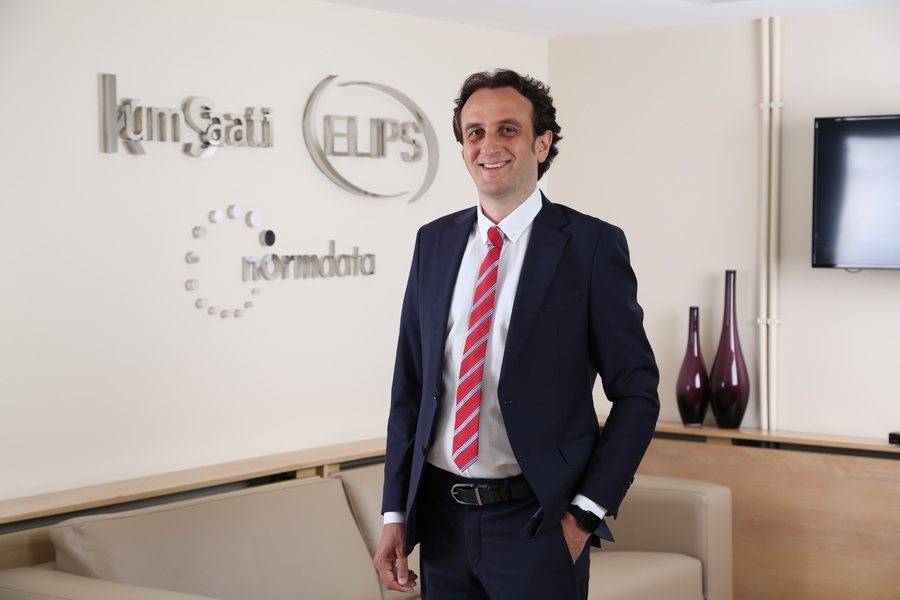 Hasan TaşçıCTO & Team Engineer
LinkedIn
-
 İrem YılmazE-Commerce Director (Corporate)
LinkedIn
-
 Öykü GeyikGrowth Head
-
 Ahmet AktasSenior Software Developer
LinkedIn
-
 Yiğit DasdogenSenior Software Developer
LinkedIn
-
 Poyraz SargınSoftware Developer
LinkedIn
-
 Mert Kemal GogersinSenior Software Developer
LinkedIn

Where experience meets intelligence.
Esat Sezer Head of Advisory Board
Esat Sezer spent more than thirty years as a Fortune 200 technology executive across consumer goods, manufacturing and retail — Senior Vice President and Global Chief Information Officer at Coca-Cola Enterprises, SVP and CIO at Whirlpool, and eleven years at Colgate-Palmolive. He has since served on boards and advisory boards including Domo, Cisco Systems, AT&T, Orange, MuleSoft and KOBIL, and co-founded the software company Ritmus.
He advises DataSync from the other side of the problem it solves. He spent that career building the systems meant to give large consumer businesses a single view of themselves, and learning precisely where those systems stop short of a decision.
“For thirty years my job was to build the single source of truth. We built it. Then four executives would sit in a room with the same correct number and still disagree about what to do — because a number is not a decision until it reaches the person who owns one. That gap is where DataSync starts. That is why I am here.”
Companies running on DataSync.












Read how they work with DataSync: Mamajoo · Nilky · Munchkin Türkiye
See DataSync on data shaped like yours.
Tell us which marketplaces, e-commerce, ERP and ad platforms you run. One call, then we connect the systems you already use.