Customer questions are rarely random. They concentrate around product compatibility, dimensions, materials, usage, availability, delivery, returns, and policy. When the answer is delayed or inconsistent, the customer may abandon the purchase or create a service case after ordering.
Sync AI CX Agent is DataSync’s external customer response infrastructure. It is built on product data and approved information sources to support consistent answers to customer questions at scale.
Why product questions are a data problem
The response team may know the policy but not the product detail. The product team may know the specification but not the marketplace question. The correct answer may be distributed across product files, manuals, FAQs, return policies, prior responses, and operational rules.
A generic language model can produce fluent text without knowing which source is approved, which product variation applies, or when the question should be escalated. Customer response infrastructure needs grounded information, product identity, policy boundaries, and confidence controls.
What the response infrastructure needs to know
Product knowledge
Specifications, dimensions, materials, compatibility, included parts, usage instructions, care requirements, age guidance, and variation-specific details should be structured and kept current.
Policy knowledge
Delivery, warranty, returns, hygiene restrictions, marketplace rules, and brand-specific support policies should be separated from general product information.
Brand response standards
Tone, wording restrictions, required disclaimers, escalation rules, and prohibited claims should be defined before automated responses are used.
Context and confidence
The system should identify the product and question type, retrieve the approved information, assess whether the answer is sufficiently supported, and route uncertain or sensitive questions to a person.
A practical response workflow
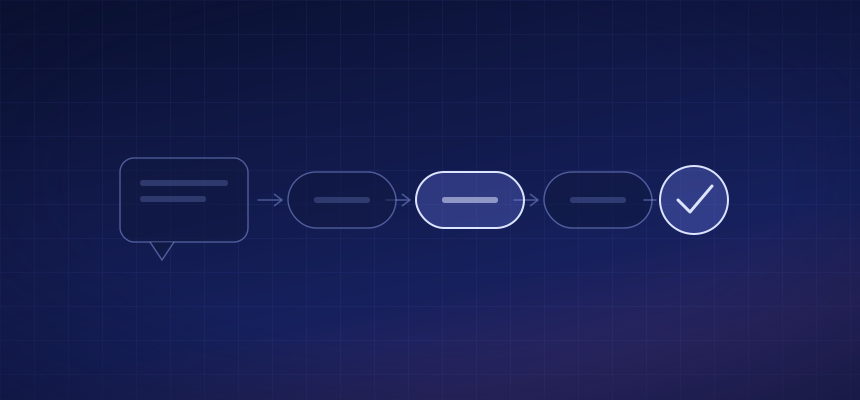
The question is received and matched to the relevant product or policy. Approved sources are retrieved. A response is generated in the brand’s language and format. Confidence and rule checks are applied. The answer is delivered or escalated. The interaction is logged so repeated questions can improve product content, FAQs, and operational analysis.
Where customer response agents are heading
Google has described retail agents that can answer questions in real time, provide tailored recommendations, and guide shoppers through the buying process.[1] The commercial opportunity is clear, but deployment quality depends on the data, controls, and workflow behind the answer.
NIST’s AI Risk Management Framework emphasizes incorporating trustworthiness into the design, use, and evaluation of AI systems.[2] For customer response, this means grounding answers in approved sources, documenting limitations, defining human oversight, and monitoring incorrect or unsupported outputs.
How Sync AI CX Agent is positioned
The approved DataSync description is direct: AI-powered customer response infrastructure built on product data. It handles customer queries at scale.
It is designed for the customer-facing layer. Its purpose is not internal commerce analysis. The system uses product information and defined knowledge sources to support detailed, consistent responses while reducing repeated manual work for the team.
What should be measured
Useful measures can include response coverage, escalation rate, answer approval rate, repeated question themes, response time, customer follow-up, and the effect of updated product content on question volume. Any public performance claim should be based on an approved DataSync customer result or documented platform data.
Deployment checklist
Confirm product-data quality. Approve source documents. Define the supported question types. Establish brand and legal rules. Set confidence and escalation thresholds. Test across product variations. Review responses with the customer experience and product teams. Monitor recurring questions and incorrect-answer risk.
The objective is not automated conversation for its own sake. It is a controlled customer response process that gives customers clearer information and gives the business a more consistent operating layer.
Sources
- [1] Google. New Tools to Help Retailers Build Generative AI Search and Agents. January 12, 2025. Source link
- [2] National Institute of Standards and Technology. AI Risk Management Framework. Framework released January 26, 2023; current resource accessed July 2026. Source link
See it on data shaped like yours.
DataSync connects marketplace, e-commerce, ERP, ad and stock data into one model, then routes each decision to the person who owns it.
Keep reading
- Executive Guide · August 24, 2026Why more dashboards don't produce better decisionsMost commerce teams no longer have a data problem. They have a decision problem — and every dashboard added to the estate quietly makes it worse.
- Use Case · August 18, 2026How Customer Feedback Becomes Operational IntelligenceCustomer feedback becomes more valuable when it is connected to products, channels, returns, fulfillment, and sales. That connection turns sentiment into an operating signal.
- Executive Guide · August 13, 2026How AI Can Detect Inventory Risk Before It Becomes Lost RevenueInventory risk is created by the relationship between stock, demand, time, and commercial plans. AI can help detect that relationship earlier when the underlying data is synchronized.